From One Stalled Tote to a System-Wide Slowdown
A tote pauses at a scanner. The whole line breathes in. Robotics software now drives every pick, pass, and merge. With the wrong setup, a tiny stall expands across shifts. At 3 seconds lost per pick and 20,000 picks a week, that is 16+ hours gone. And that is before rework or manual overrides. The fix often starts where people don’t look—inside the orchestration layer and its timing rules.
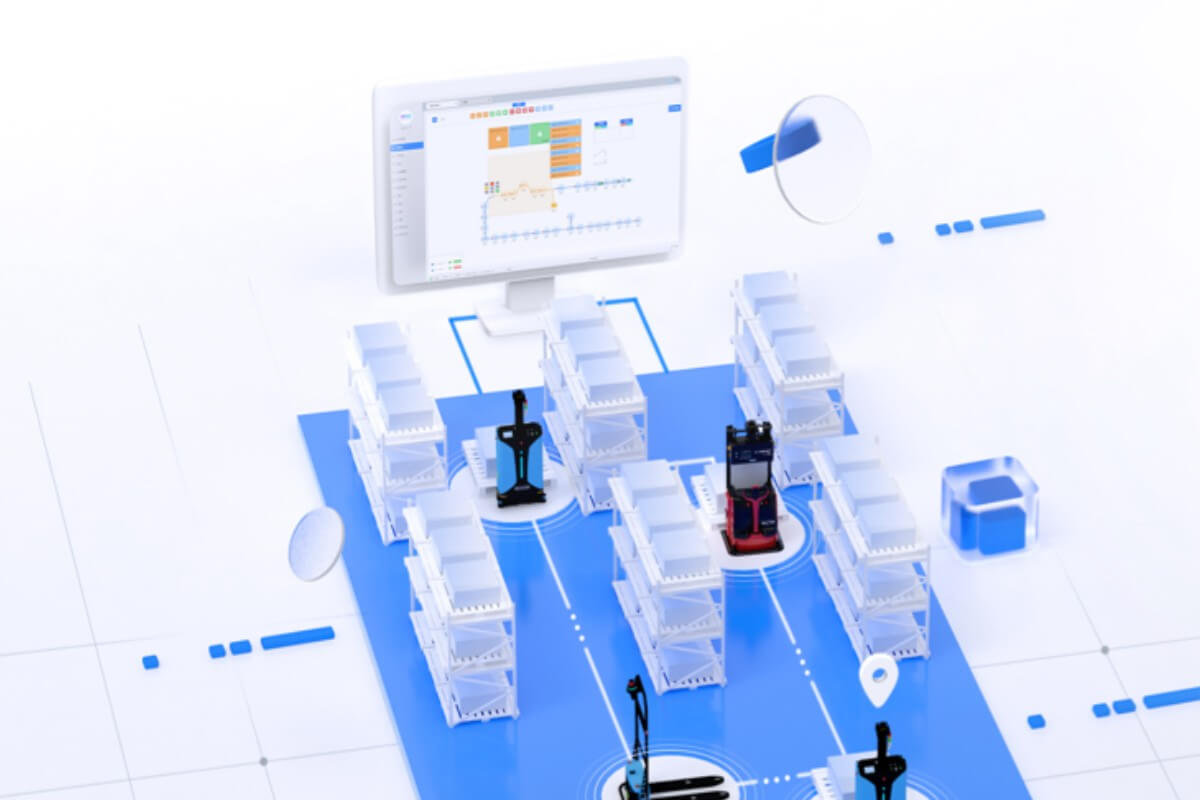
Teams shop for software for automated warehouses to boost flow, not add noise. But integrations stack up. WMS calls, PLC handshakes, and edge computing nodes all consume the same latency budget. One jitter spike, and AGVs cluster like cars at a yellow light. (You can feel the drag in your KPIs.) So ask yourself: is your stack tuned for the actual line, or only for a demo path?

Direct answer: mis-synced services cause most slowdowns—funny how that works, right? The question is how to shape events so they arrive when machines can act. That is where timing, not raw speed, wins. Let’s unpack the hidden friction and set up a cleaner path to peak output.
The Hidden Friction in “Good Enough” Warehouse Software
Technical view first. The goal of software for automated warehouses is steady, low-variance flow. Traditional stacks chase average speed. They miss worst-case timing. An overloaded MQTT broker can add jitter. A chatty WMS API call blocks a PLC routine. A ROS 2 bridge drops a message, then retries, then floods. Each event is small; together, they choke the merge point—then your ops team blames the robot.
Look, it’s simpler than you think. Most pain lives in three places: protocol mismatch (OPC UA to custom TCP), uneven service retries, and stale route plans. The planner sent a perfect path five seconds late. The lift was free two seconds ago. Now it’s not. Deadlock blooms from that tiny drift. Your digital twin says “green,” your aisle says “wait.” And then it snaps back. But your throughput target does not.
Where do the bottlenecks hide?
Hidden in the mix of timing and topology. Edge computing nodes push updates fast, but the network link lags. Power converters reset an AMR, and the orchestration layer does not reassign. Your alarm system fires for minutes, not milliseconds. You get a clean dashboard, yet a messy queue. The fix is not another robot. It is scheduling that honors device constraints, queue lengths, and the true route cost in live time.
Principles That Future-Proof Your Flow
Now shift from patchwork to principles. Modern software for automated warehouses favors event-driven control with bounded retries, time-aware networking, and clear handoffs. Compare that to batch polling and best-effort queues. The new path uses microservices with strict SLAs, a lean message bus, and latency guards at every hop. The planner feeds small, frequent updates. SLAM refresh stays local on the robot. Orchestration reassigns tasks when a node crosses a delay threshold—no hero scripts required.
What’s Next
Expect tighter loops between the digital twin and the floor. Think model-predictive control that accounts for aisle congestion and charge state. Expect TSN-like scheduling for predictable links. Expect standard interfaces (OPC UA, ROS 2, MQTT) with fewer ad-hoc bridges. The result is simple: fewer stalls, gentler queues, and stable cycle times. We saw the pitfalls: jitter, mis-timed APIs, and stale plans. The forward move is a stack that measures delay as a first-class signal—and adapts before humans notice.
To choose well, use three evaluation metrics. First, latency transparency: can you trace each event’s timing end to end? Second, orchestration resilience: does the system re-plan under load without manual taps? Third, integration fitness: does it speak WMS, PLCs, and sensors through vendor-agnostic protocols with clear QoS? If a tool scores high on those, your line breathes easy—and your people do too. Learn more at SEER Robotics.